
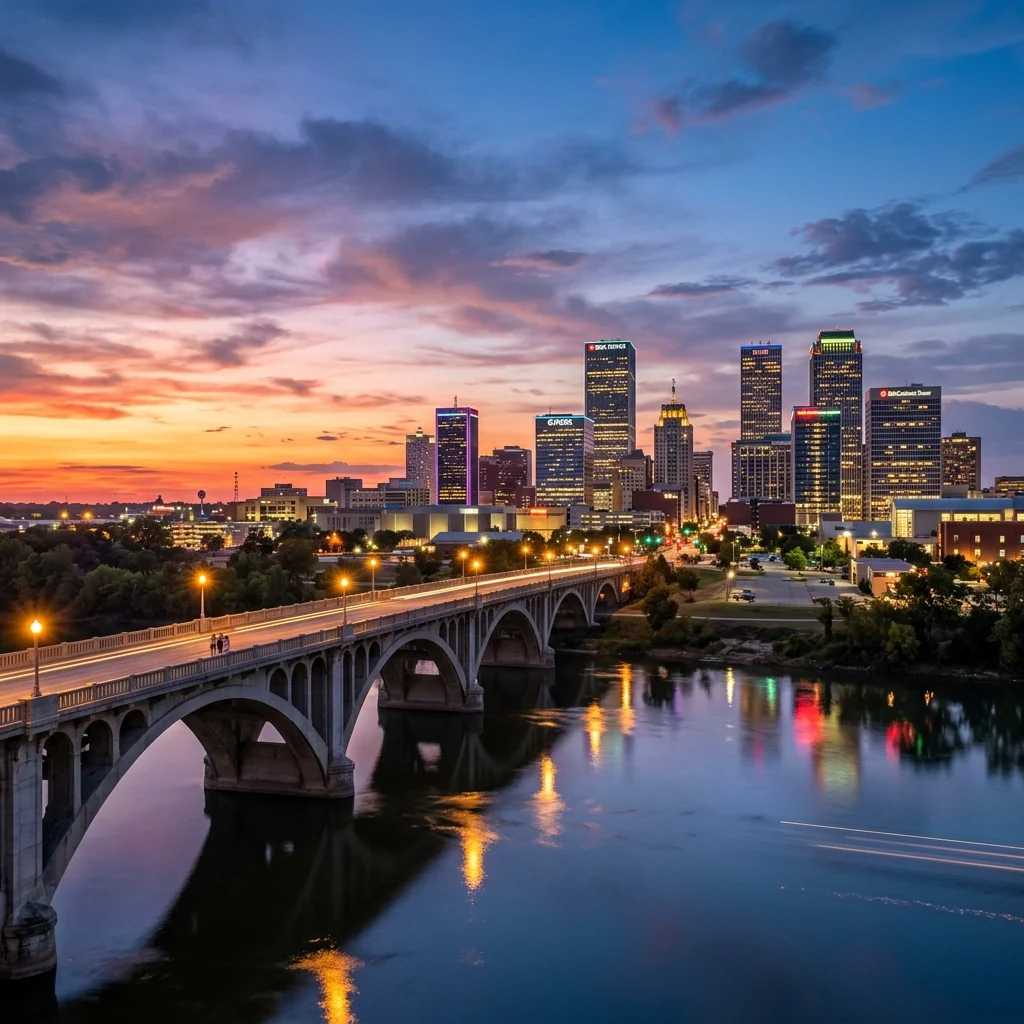
Professional Service from Tulsa's Roofing Authority
Proof Construction brings forensic precision and master craftsmanship to every project. Our team of certified installers, combined with our investigative methodology, ensures your roof is installed to the highest standard of quality and durability.
Why Choose Proof Construction?
- Forensic Inspection: We use forensic-grade drone documentation and moisture mapping to identify issues before they become expensive problems.
- Insurance Expertise: Our supplement intelligence team has recovered 40%+ more per claim by identifying missed items and incorrect material specifications.
- Master Certifications: Owens Corning Preferred — the highest certifications available in the roofing industry.
- Community Roots: Serving Tulsa and the Metro area since 2016 with over 3,100 completed projects.
Ready to Get Started?
Contact Proof Construction for a free consultation and estimate.
Call (918) 734-4444R-Value Per Inch — Why Closed-Cell Polyurethane Dominates Commercial Roofing
Closed-cell spray polyurethane foam (SPF) delivers R-6.5 to R-7.0 per inch of thickness. That's the highest R-value per inch of any commercially available insulation material. Polyisocyanurate (polyiso) board: R-5.6 to R-6.0 per inch. Extruded polystyrene (XPS): R-5.0 per inch. Fiberglass batts: R-3.0 to R-4.0 per inch. In a commercial roofing assembly where every inch of thickness affects parapet height, door clearances, and drainage slopes, the density of SPF's thermal performance is a structural advantage.
Tulsa's commercial building stock — primarily built between 1970 and 2000 — was designed with minimal insulation by modern standards. The average pre-2000 commercial roof in Tulsa has R-10 to R-15 insulation. Current IECC 2021 requirements for commercial buildings in Oklahoma's Climate Zone 3A (which includes Tulsa) mandate R-20 continuous insulation minimum for roof assemblies, with R-30 recommended for optimal energy performance. That's a gap of R-10 to R-20 that must be closed.
Closed-cell SPF at 3 inches of thickness delivers R-19.5 to R-21.0 — hitting the R-20 continuous insulation requirement in a single application. No board joints. No thermal bridging. No compression at fasteners. The foam expands to fill every cavity, every gap around penetrations, every irregular surface. Air leakage through the roof assembly drops to near zero. Air leakage accounts for 25-40% of commercial building heating and cooling load according to DOE studies. Zero air leakage means zero energy waste through the roof plane.
Applied cost for closed-cell SPF in the Tulsa market: $2.80-$3.50 per board foot (1 inch thick, 1 sq ft). At 3 inches of coverage on a 10,000 sq ft commercial roof: $84,000-$105,000 installed. That's $8.40-$10.50 per sq ft for the insulation layer only. High upfront cost — but the payback math changes when you factor in HVAC downsizing, reduced operating costs, and IRS Section 179D tax deductions for energy-efficient commercial buildings.
Commercial Roof ROI — Tulsa's Cooling Degree Day Advantage
Tulsa's 2024 cooling degree days (CDD): 2,142. Heating degree days (HDD): 3,802. The combination means a commercial roof in Tulsa works year-round — shedding solar heat gain in summer, retaining interior heat in winter. SPF's closed-cell structure addresses both with a single material: high R-value for thermal resistance, plus an impermeable air barrier that stops conditioned air from escaping.
Real ROI data from Proof Construction's commercial projects in Tulsa: a 12,000 sq ft retail building on 71st Street installed 3.5 inches of closed-cell SPF in 2019. Pre-retrofit annual HVAC cost: $18,400. Post-retrofit annual HVAC cost: $11,200. Annual savings: $7,200. Simple payback on the $108,000 SPF installation: 15 years. But with Oklahoma's 2025 utility rate increases averaging 8.3% per year (per Oklahoma Corporation Commission filings), the payback accelerates to 11-12 years in real-dollar terms.
The DOE's Commercial Buildings Energy Consumption Survey (CBECS) shows that buildings with continuous insulation at the roof assembly have 34% lower heating loads and 28% lower cooling loads than buildings with cavity-only insulation. SPF is the only insulation material that provides both continuous insulation and air barrier in a single application. No separate vapor retarder needed. No additional air sealing. The foam is the system.
Tulsa commercial property owners also qualify for federal 179D tax deductions: up to $1.88 per sq ft for buildings achieving 50% energy cost reduction compared to ASHRAE 90.1-2007 baseline. A 10,000 sq ft roof achieving 50%+ energy savings generates an $18,800 tax deduction. That's real money — applied against the insulation cost directly.
SPF vs. Polyiso vs. XPS — The 20-Year Cost Comparison
Twenty-year lifecycle cost analysis for a 10,000 sq ft Tulsa commercial roof assembly (insulation only, not including membrane or deck):
Closed-cell SPF (3.5 inches, R-24.5): $98,000-$122,500 installed. No thermal drift. No moisture absorption. No fastener thermal bridging. R-value stable over 20+ years. No replacement needed if membrane layer is maintained. Estimated 20-year total cost: $98,000-$122,500.
Polyiso (4 inches, R-22.4): $52,000-$68,000 installed. Thermal drift of 10-15% over first 2 years as blowing agent off-gasses (actual R-value drops to R-19 to R-20). Multiple board joints create thermal bridges. Fastener penetration every 2 sq ft creates additional thermal loss. Moisture-sensitive — wet polyiso loses 50%+ of R-value. Estimated 20-year total cost: $52,000-$68,100 + $6,000-$12,000 for thermal drift losses = $58,000-$80,000.
XPS (4 inches, R-20): $44,000-$58,000 installed. R-value drifts 15-20% over 5-10 years as blowing agent escapes (actual R-value drops to R-16 to R-17). Lower compressive strength than SPF or polyiso. Moisture absorption of 2-4% by volume in wet conditions, further degrading R-value. Multiple board joints. Estimated 20-year total cost: $44,000-$58,100 + $8,000-$15,000 in energy losses = $52,000-$73,000.
SPF costs more upfront — but delivers the highest real-world thermal performance, zero thermal drift, zero moisture degradation, and no thermal bridging. For a Tulsa commercial building operating 8-10 years or more, the operating cost differential offsets the upfront premium. And if you include the 179D tax deduction, SPF often wins on net cost.